
Most Effective Ways to Remove Hard Water Stains in Bathrooms
If you live with hard water, you have likely noticed how quickly it affects your bathroom. You clean the sink, yet it still looks dull. You wipe the shower glass, and cloudy streaks remain. Those marks are not dirt. They are mineral deposits left behind when water dries on those surfaces.
Bathroom hard-water stains build slowly, then suddenly feel impossible to remove. In most cases, you can remove hard water stains in bathrooms without damaging surfaces or spending hours scrubbing. You just need to know what you are dealing with and how to clean it the right way.
This guide walks you through what causes hard water stains, how to remove tough bathroom water stains, and how to keep them from coming back. The methods outlined here focus on surface safety, effectiveness, and everyday use.
Why Hard Water Stains Keep Showing Up in Your Bathroom
Hard water contains minerals, mainly calcium and magnesium. Each time you use the sink, shower, or tub, water splashes and dries. When it does, mineral residue from hard water stays behind. Over time, that residue builds up.
You usually notice it first as white chalky stains in the bathroom. Faucets lose their shine. Shower glass turns cloudy. Tiles feel rough instead of smooth. Soap scum and hard water stains often combine, which makes everything look worse and harder to clean.
Once you understand what causes hard water stains in bathrooms, the cleaning process makes more sense. You are not dealing with grime. You are breaking down mineral buildup, which is a common issue in residential bathrooms, especially in homes with untreated hard water.
Are Hard Water Stains Permanent
You might wonder if the damage is already done. In most cases, it is not.
Most bathroom hard water stains are removable. Even stubborn water stains in bathrooms usually come off with the right cleaner and a little patience. Problems only become permanent when mineral deposits accumulate over the years and begin to etch glass or wear down finishes. For this reason, regular bathroom water stain removal matters more than aggressive scrubbing.
Start With the Least Aggressive Cleaning Method
Hard water stains can often be removed without the use of strong chemical cleaners. Starting with gentler methods helps reduce the risk of surface damage while still addressing mineral buildup effectively.
That’s usually the point where starting simple makes sense.
Why Vinegar Works on Hard Water Stains
White vinegar works well on hard water stains because it reacts with calcium and lime deposits, helping loosen buildup on many common bathroom surfaces.
For most stains, a quick spray and a short wait is enough. After several minutes, wipe the area with a soft cloth or sponge, then rinse and dry the surface. You’ll notice the biggest difference in sinks, faucets, and shower glass where mineral residue builds up quickly.
Skip vinegar on natural stone, as the acid can cause etching or dull the surface.
Where Baking Soda Helps Most
When stains feel rough or thick, baking soda helps without scratching.
You can mix baking soda with a little water to form a paste. Apply it to mineral deposits on bathroom surfaces, rub gently with a cloth, then rinse and dry. This works well for hard water stains on bathtubs, tiles, and grout. Baking soda adds light abrasion but stays safe when you avoid heavy pressure.
When Natural Methods Are Not Enough
Some hard water stains develop gradually and become more difficult to remove as mineral deposits accumulate on bathroom surfaces, which is often seen in bathrooms that get daily use and do not dry fully between cleanings. If vinegar or baking soda no longer loosens the buildup, a commercial cleaner made for mineral deposits may be more effective.
Look for a limescale remover. It’s made for the calcium and lime residue commonly found around bathroom fixtures, sinks, and shower edges. Non-abrasive formulas are generally the safest option, especially on finished or plated surfaces. Testing the product on a small, less visible area helps reduce the risk of surface damage.
Chemical cleaners can remove hard water stains more quickly than natural methods, but careful use plays an important role in preserving bathroom finishes over time.
Match the Cleaner to the Surface
Not every surface handles cleaning the same way. Adjusting your approach helps you avoid damage.
Faucets and Fixtures
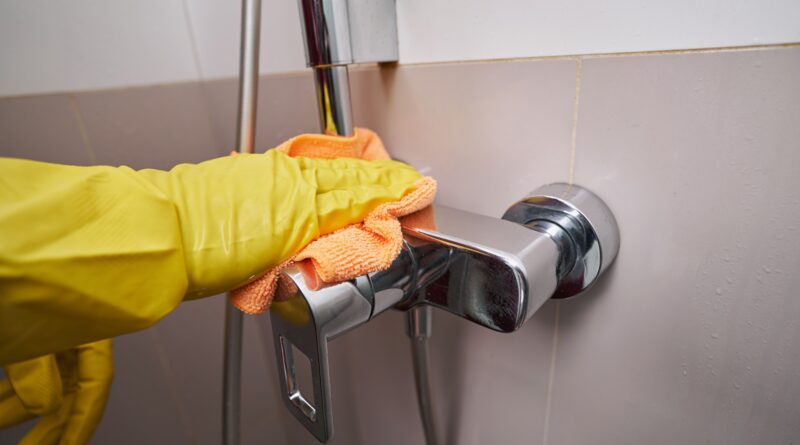
Mineral buildup tends to appear quickly on bathroom fixtures, especially on chrome and stainless steel surfaces where loss of shine is easy to notice. Light deposits can usually be addressed with vinegar applied to the surface, while heavier buildup may respond better when a vinegar-dampened cloth is left in place briefly before wiping. Rinsing and drying the fixture afterward helps limit new mineral residue from forming as water evaporates.
Shower Glass
Shower glass is usually the first place you notice it in bathrooms with frequent use. Mineral deposits can settle quickly as water dries, leaving the glass cloudy over time. Vinegar or a cleaner formulated for glass can help loosen this residue when allowed a short dwell period before wiping. Using a soft microfiber cloth reduces the risk of scratching, which can make future stains more difficult to remove.
Sinks and Bathtubs
Most tubs and sinks handle gentle cleaning well, especially porcelain and acrylic.
Baking soda paste works well for white, chalky bathroom stains. Rinse thoroughly and dry the surface to prevent hard-water minerals from settling again.
Tiles and Grout
Removing hard water stains from tiles requires care.
You can use vinegar on the tile surface, but switch to baking soda paste for grout. Light brushing removes mineral deposits without weakening grout lines.
How Often You Should Clean Hard Water Stains
If you wait too long, stains harden. If you clean too aggressively, you risk damaging the surface.
A light wipe-down once a week and deeper cleaning every few weeks keep hard-water stains on bathroom surfaces under control. Addressing fresh spots early makes it much easier to clean hard water stains.
How to Prevent Hard Water Stains in Bathrooms
Removing stains is one part of the solution. Prevention reduces the need for repeated deep cleaning.
Drying surfaces after use makes a big difference. Keeping a microfiber cloth near the sink or shower helps stop mineral buildup in bathrooms before it starts.
Using a water repellent on shower glass also helps water run off instead of drying on the surface. Adjusting daily habits does more to reduce hard water residue than heavy cleaning sessions.
When It Makes Sense to Find a Cleaner
If mineral deposits keep recurring or surfaces never look clean, finding a cleaner with experience in hard water stain removal for bathrooms may be the best option, as this is common in homes where mineral buildup has been forming for years.
A professional cleaner understands which products work on which surfaces and how to safely remove mineral buildup. This can help protect fixtures and finishes from long-term damage.
Safe Cleaning Matters More Than Speed
Removing hard water stains safely should always come before speed.
Use gentle pressure, avoid mixing products, and stick with non-abrasive bathroom cleaners when possible. Protecting bathroom finishes keeps surfaces looking better for years.
FAQs
For many bathrooms, vinegar handles light to moderate stains. When buildup has been sitting longer, a limescale cleaner is often more effective.
Stubborn stains usually respond better to time than pressure. A limescale remover left on the surface briefly often works better than scrubbing.
In most situations, hard water stains can be removed. Results depend on how long the buildup has been present and the type of surface involved.
Regular light cleaning keeps mineral residue from setting in, with occasional deeper cleaning needed as buildup starts to appear.
Minerals in water dry on surfaces, leaving deposits. Soap scum makes them worse.
Yes. Vinegar and baking soda are effective natural hard water stain removers.
Dry surfaces after use, clean regularly, and address new spots right away.
Hard water stains do not mean your bathroom is dirty. They mean your water carries minerals that need the right approach. With steady habits and the right approach, hard water stains can be managed before they become a larger issue.


